

Course: Master of Business Administration (MBA)
College: Pillai University, School of Business (PG)
Date of Visit: 26th October, 2026
Location: National Institute of Securities Markets (NISM), Mohpada, Maharashtra
1. Introduction
An Industrial Visit to the National Institute of Securities Markets (NISM) was organized to provide MBA students with practical exposure to the Indian securities market, its regulatory framework, financial instruments, trading processes, and career opportunities in the financial services industry.
The visit helped us connect classroom concepts in finance with the real-world functioning of capital markets. Through informative sessions and a practical session in the trading laboratory, we gained insight into the role of the Securities and Exchange Board of India (SEBI), investor protection, market infrastructure, and professional certifications offered by NISM.
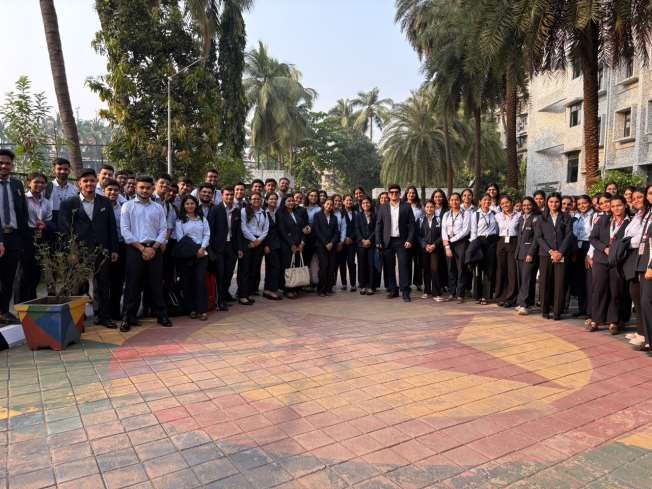

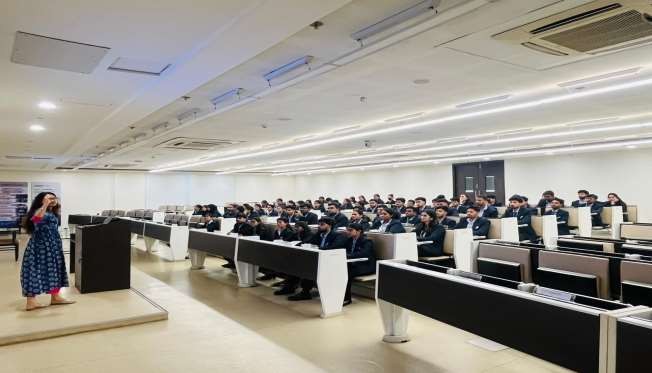
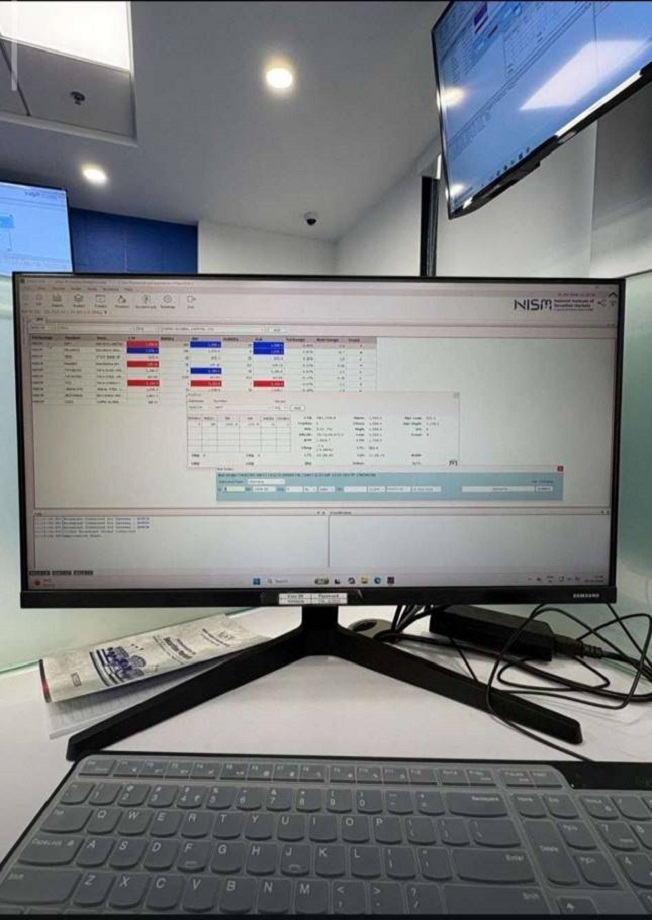
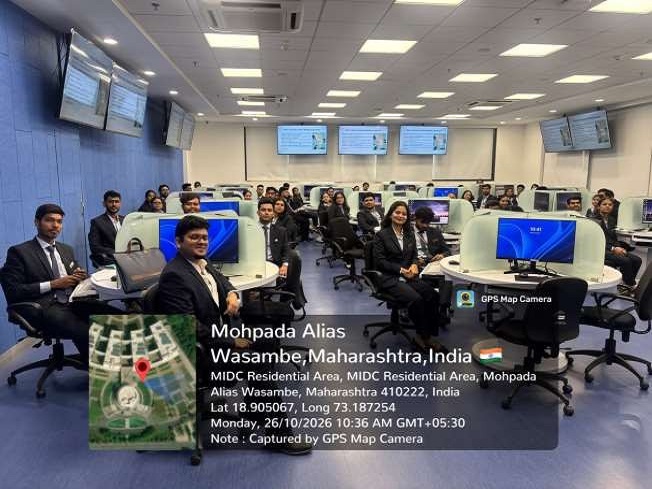
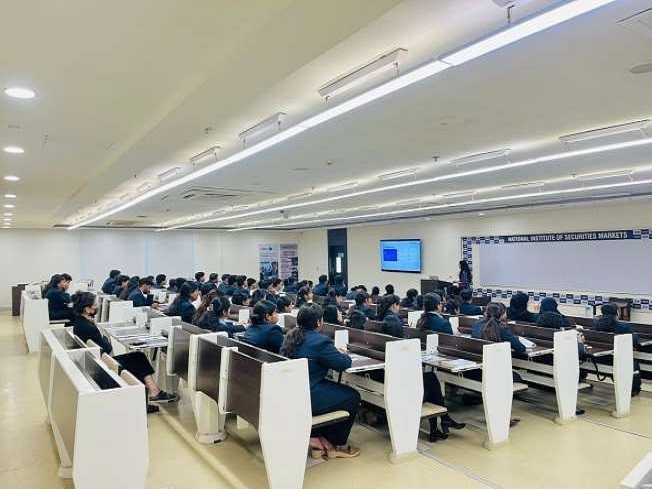
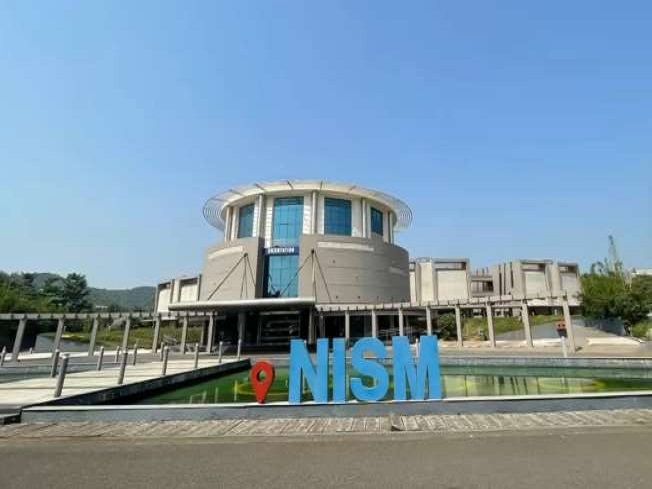
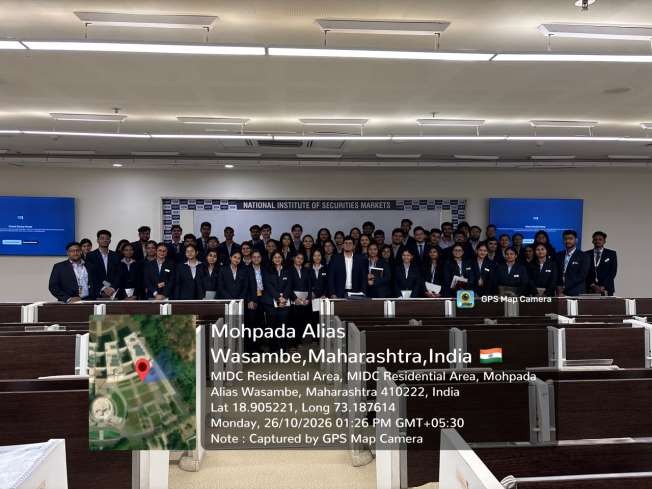
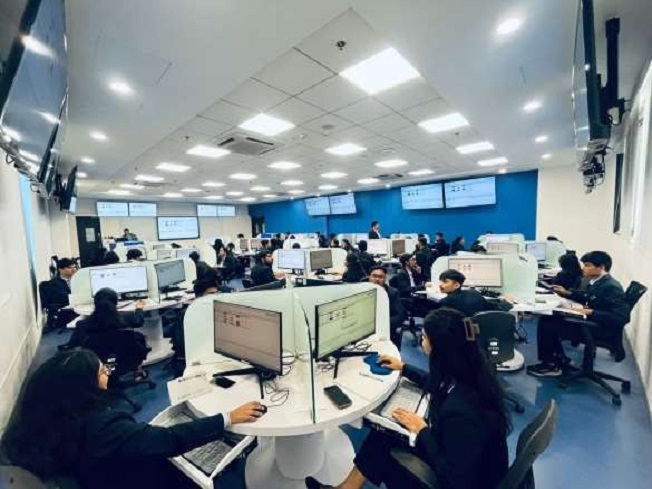
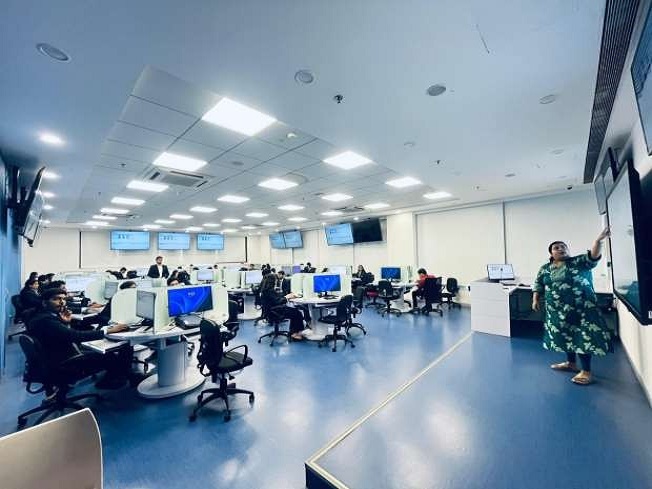
The visit was well organized and supported by good infrastructure and facilities. Breakfast and lunch were arranged for the students, making the experience comfortable and convenient. The coordinator explained the topics clearly and patiently, while the trading laboratory provided a welcoming and practical learning environment.
2. Objectives of the Visit
- To understand the structure and functioning of the Indian securities market.
- To learn about SEBI and the roles of other financial regulators.
- To understand the roles of issuers, investors, intermediaries, and market infrastructure institutions.
- To learn the stages involved in executing and settling a stock market trade.
- To understand investor protection measures and safe investing practices.
- To gain practical exposure through the trading laboratory.
- To explore NISM certifications and career opportunities in the securities market.
3. About NISM
The National Institute of Securities Markets (NISM) is an educational and capacity-building institution established by SEBI. It contributes to the development of knowledge, skills, and professional standards among people working in, or preparing to enter, the securities markets.
NISM conducts educational programmes, certification examinations, and training initiatives in areas such as securities markets, investment advisory, research analysis, mutual funds, operations, risk management, and other financial services. Its work supports a more knowledgeable workforce and promotes investor awareness and responsible participation in financial markets.
4. Key Learnings During the Visit
4.1 Overview of the Indian Securities Market
The securities market connects entities that require capital with investors who wish to invest their savings. Companies and other eligible entities may raise funds for expansion, infrastructure, and other financial needs, while investors gain opportunities to invest in financial instruments and earn returns in line with the risks involved.
- Primary Market: The market in which securities are issued to investors for the first time, such as through an Initial Public Offering (IPO).
- Secondary Market: The market in which existing securities are bought and sold among investors through recognized stock exchanges.
4.2 Legal Definition and Types of Securities
The session introduced us to the meaning of securities under the Securities Contracts (Regulation) Act, 1956 (SCRA), and the different instruments available in financial markets.
- Equity shares Preference shares Debentures Bonds
- Government securities Derivatives
- Units of mutual funds Exchange-traded funds (ETFs)
- Securities issued by collective investment schemes
- Other instruments recognized as securities under applicable law
These instruments differ in ownership rights, risk, return potential, liquidity, and investment purpose.
4.3 Evolution of the Indian Stock Market
We learned how India’s securities market has developed from a largely paper-based system into an electronic, technology-driven environment. Key milestones include:
- Paper-based share certificates: Securities were historically held in physical form, involving paperwork and manual processing.
- SEBI Act, 1992: SEBI’s statutory framework strengthened securities market regulation and investor protection.
- Screen-based trading: Electronic trading improved transaction speed, transparency, and accessibility.
- Dematerialization: Securities began to be held electronically in demat accounts, reducing risks associated with physical certificates.
- Technology-driven markets: Online platforms, digital account opening, electronic settlement, and surveillance systems have modernized market operations.
These developments have supported greater operational efficiency, transparency, and participation in India’s securities market.
5. The Securities Market Ecosystem
5.1 Issuers
Issuers are companies, governments, or other eligible entities that raise funds by issuing securities. The capital raised may be used for business growth, infrastructure, or other financial purposes
5.2 Market Infrastructure Institutions
- Stock exchanges: Facilitate the buying and selling of securities.
- Clearing corporations: Determine clearing obligations and support settlement.
- Depositories: Hold securities in electronic form.
5.3 Investors
Investors provide capital by purchasing securities. They may include retail investors, institutional investors, domestic investors, and foreign investors, subject to applicable regulations.
5.4 Financial Market Intermediaries
Intermediaries connect investors, issuers, and market institutions. The session introduced us to stockbrokers and trading members, depository participants, mutual fund distributors, investment advisers, research analysts, merchant bankers, portfolio managers, and other registered market professionals.
We also learned how intermediaries contribute to public issues, secondary-market trading, asset management, investment advice, and market operations.
6. The Life Cycle of a Trade
One of the key topics was understanding what happens after an investor places a buy or sell order on a trading platform. A typical trade involves the following stages:
- Order placement: The investor places a buy or sell order through a trading platform.
- Order routing: The broker’s system sends the order to the relevant exchange.
- Order matching: The exchange matches compatible orders according to its rules.
- Trade confirmation: The transaction is confirmed after the orders are matched.
- Clearing: The clearing corporation determines the obligations of the parties involved.
- Settlement: Funds and securities are transferred according to the applicable settlement cycle.
This helped us understand that trading involves several coordinated systems and processes, rather than simply clicking a buy or sell button.
7. Major Laws Governing the Securities Market
We were introduced to key laws that support the legal and regulatory framework of India’s financial markets:
- Securities Contracts (Regulation) Act, 1956 (SCRA): Governs securities contracts and recognized stock exchanges.
- SEBI Act, 1992: Establishes SEBI’s powers and responsibilities.
- Depositories Act, 1996: Provides the legal framework for holding and transferring securities electronically.
- Companies Act, 2013: Governs companies, including relevant provisions on securities issuance and corporate governance.
- Prevention of Money Laundering Act, 2002 (PMLA): Addresses money laundering and related compliance obligations.
- Foreign Exchange Management Act, 1999 (FEMA): Governs foreign-exchange transactions and relevant cross-border financial activities.
- Indian Contract Act, 1872: Provides general principles governing contracts, including relevant contractual relationships in financial markets.
- Bharatiya Nyaya Sanhita, 2023 (BNS): Contains criminal-law provisions relevant to offences that may arise in financial and commercial contexts.
The session emphasized that a sound legal framework is essential for fair practices, accountability, and investor confidence.
8. Regulators of the Financial System
We learned that different authorities oversee different parts of India’s financial system:
- SEBI: Regulates the securities market and protects securities investors.
- Ministry of Finance (MoF): Formulates and administers financial and economic policies through its departments.
- Reserve Bank of India (RBI): Regulates banks, conducts monetary policy, and oversees important parts of the financial system.
- Ministry of Corporate Affairs (MCA): Administers company law and regulates corporate affairs.
- International Financial Services Centres Authority (IFSCA): Regulates financial products, services, and institutions in India’s International Financial Services Centres within its jurisdiction.
- Insurance Regulatory and Development Authority of India (IRDAI): Regulates the insurance sector.
- Pension Fund Regulatory and Development Authority (PFRDA): Regulates and develops the pension sector within its mandate.
Understanding these institutions helped us recognize the importance of coordinated regulation across the financial system.
9. Functions of SEBI
SEBI plays a central role in maintaining the integrity and orderly development of India’s securities market. Its functions were explained through three broad categories:
- Legislative function: SEBI frames regulations, guidelines, and rules within its statutory authority.
- Executive function: SEBI supervises market participants, conducts inspections and investigations, and monitors compliance.
- Quasi-judicial function: SEBI adjudicates certain matters and conducts proceedings under its legal powers, including issuing directions and imposing penalties where authorized.
The session also discussed SEBI’s enforcement activities. A figure of approximately ₹798.87 crore for FY 2024–25 was recorded in our notes; however, the exact category and official reporting figure should be verified against the relevant SEBI publication before formal submission or external use.
10. GIFT City and IFSCA
The visit introduced us to GIFT City (Gujarat International Finance Tec-City), a financial services hub in India. The International Financial Services Centres Authority (IFSCA) regulates financial services and activities within the International Financial Services Centre under its jurisdiction.
- GIFT City aims to support international financial services and cross-border financial activity.
- Its ecosystem includes eligible banking, capital-market, fund-management, insurance, and other financial services.
- Eligible domestic and international institutions and investors may participate in permitted activities, subject to applicable regulations and eligibility criteria.
- Its development is intended to strengthen India’s role in international financial services.
This session helped us understand the growing importance of international financial centres and the career opportunities associated with them.
11. Investor Protection and Financial Safety
Investor protection was another important area covered during the visit. We learned that investors should verify information, use authorized platforms, understand investment risks, and be cautious of fraudulent offers.
- SEBI SCORES: A platform for lodging and tracking eligible securities-market complaints.
- SMART ODR: An online dispute-resolution framework for eligible securities-market disputes.
- Saa₹thi app: SEBI’s investor-education application for learning about securities markets and investment concepts.
- Registration verification: Checking whether brokers, investment advisers, research analysts, and other professionals are appropriately registered.
- Payment verification: Using valid and verified payment details and following prescribed payment processes.
- Investor Protection Fund: A mechanism that may provide protection in specified circumstances under applicable rules.
- Cybersecurity awareness: Recognizing phishing, fraudulent investment offers, impersonation, and suspicious links.
Red Flags and Green Flags
- Guaranteed or unusually high returns with little or no risk.
- Pressure to invest immediately.
- Unregistered advisers or suspicious trading groups.
- Requests for passwords, OTPs, or unauthorized account access.
- Unverified payment details or misleading investment claims.
- Properly registered market intermediaries.
- Transparent fees and clearly explained risks.
- Verified payment channels and official communication.
- Written documentation and appropriate disclosures.
- Independent research and informed investment decisions.
These lessons reinforced the importance of financial literacy, digital awareness, and responsible investing.
12. Careers in the Securities Market
The career-guidance session highlighted that the securities market offers opportunities across institutions and professional functions
- Regulators and Market Infrastructure Institutions: Regulatory support, surveillance, compliance, exchange operations, clearing, and settlement.
- Sell-side firms: Brokerage, securities distribution, research, investment banking, and trading services.
- Buy-side firms: Mutual funds, portfolio management, alternative investment funds, and institutional investment management.
- Advisory and wealth management: Investment planning, wealth advisory, and client relationship management.
- Market services: Depository operations, transaction processing, risk management, and compliance.
- Enabling functions: Technology, cybersecurity, data analytics, legal services, training, and financial education.
An important takeaway was that the securities market is not limited to traders. It also offers opportunities for finance graduates, analysts, operations professionals, technology specialists, compliance officers, and investment advisers.
13. NISM Certifications and Their Importance
We learned about NISM certification examinations designed for professionals working in different segments of the securities market. Examples discussed during the visit included the following areas. Certification names and requirements can change, so the latest official NISM information should be checked before applying.
| Certification Area | Relevance |
|---|---|
| Investment Adviser | Investment advice, suitability, and advisory responsibilities |
| Research Analyst — Series XV | Securities research, financial analysis, and research-related regulations |
| Equity Derivatives — Series VIII | Equity derivatives products, strategies, and market operations |
| Operations and Risk Management — Series VII | Market operations, risk controls, and operational processes |
| Depository Operations | Demat services and depository-related operations |
| Merchant Banking — Series IX | Merchant banking activities and regulatory requirements |
| Compliance Officer — relevant Series III modules | Compliance responsibilities in applicable market segments |
| Portfolio Management — Series XXI-B | Portfolio management-related knowledge and regulatory requirements |
| Alternative Investment Fund Managers — Series XIX-C | Knowledge relevant to specified alternative investment fund roles |
| IFSCA-related certification | Knowledge relevant to applicable international financial services activities |
NISM certifications can help individuals develop specialized market knowledge and prepare for relevant roles. Certain certifications are mandatory for specified regulated activities. The applicable requirement depends on the role and current regulatory framework. We also discussed the SEBI investor certification examination and the importance of investor education in promoting informed financial decisions.
14. Practical Learning: Trading Laboratory
One of the most engaging highlights of the industrial visit was the practical session in the trading laboratory. The laboratory was comfortable, well-maintained, and suitable for learning, which made it easier for us to focus on the activities and understand the concepts being demonstrated.
The coordinator guided us through the session in a clear, patient, and informative manner. The explanations were easy to follow and helped us connect theoretical finance concepts with practical trading-related activities
- How trading platforms display market information.
- How buy and sell orders are entered and processed.
- How investors observe price movements and market activity.
- The importance of accuracy, timing, and discipline in trading.
- The role of technology in modern securities markets.
- Why investors should understand risk before making investment decisions.
The practical session complemented our classroom learning and made the functioning of the stock market easier to understand. The quality of the facilities and the coordinator’s guidance contributed positively to the overall learning experience.
15. Key Market Statistics Discussed During the Visit
The session included figures illustrating the scale and changing profile of India’s securities market. The following figures were recorded in our notes:
| Indicator | Figure recorded in notes |
|---|---|
| Unique investors | Approximately 13 crore |
| Trading accounts | Approximately 25.7 crore |
| Demat accounts | Approximately 23 crore |
| Average investor age | Approximately 33 years |
| Women investors | Approximately one in four |
| Mutual fund SIP-related figure | ₹32,490 crore |
These figures should be treated as a snapshot from the presentation rather than verified current statistics. The reporting dates and definitions for investor, trading-account, and demat-account figures—and the period and precise meaning of the SIP figure—should be confirmed before external publication. The discussion nevertheless highlighted the scale of retail participation, the role of women investors, and the growing importance of digital financial services.
16. Overall Experience and Learning Outcomes
The visit was informative, engaging, and well organized. The infrastructure and facilities were good, and the coordinator explained the concepts clearly, patiently, and effectively. The trading laboratory provided a comfortable environment for practical learning and helped us better understand the functioning of trading platforms. Breakfast and lunch arrangements were also provided, making the visit convenient and adding to the positive overall experience.
The major learning outcomes were:
- Developed a broader understanding of the structure and evolution of India’s securities market.
- Learned about SEBI’s regulatory, supervisory, and quasi-judicial responsibilities.
- Understood the roles of issuers, investors, intermediaries, exchanges, clearing corporations, and depositories.
- Gained insight into the life cycle of a stock market trade.
- Learned about the legal framework and investor-protection mechanisms governing the securities market.
- Explored NISM certifications and career opportunities in financial services.
- Received practical exposure to trading-related activities through the laboratory session.
- Recognized the importance of cybersecurity, regulatory compliance, and responsible investing.
17. Conclusion
The industrial visit to the National Institute of Securities Markets was a valuable learning experience that strengthened our understanding of India’s securities market, SEBI’s regulatory role, the functioning of market intermediaries, and investor protection.
The trading-laboratory session was a major highlight because it helped us connect classroom learning with practical market activities. The coordinator’s clear explanations, the comfortable learning environment, and the good infrastructure made the session engaging and easy to follow. The breakfast and lunch arrangements also contributed to a well-organized and pleasant visit.
Overall, the visit broadened our knowledge of financial markets, introduced us to relevant professional certifications, and helped us identify potential career paths in finance. It was a meaningful academic experience that combined theoretical learning, practical exposure, and career awareness.
