

INDUSTRY ACADEMIA INTERACTION – HR NEXUS
Inclusive Workplace: Leveraging Collective Intellectual and Emotional Capital for Organizational Advantage
The HR Club of the School of Business (Postgraduate), Pillai University, organised an Industry – Academia Interaction session under its HR NEXUS initiative on 17th October 2026, from 10:00 a.m. to 11:30 a.m. at Conclave 2, Pillai University. The session featured Mr. Mohit Kumar, President – HR, Hindalco Industries, Aditya Birla Group, and author of Humanising Downsizing. Centred on the theme “Inclusive Workplace: Leveraging Collective Intellectual and Emotional Capital for Organizational Advantage,” the session aimed to familiarise students with the significance of workplace inclusion and demonstrate how contemporary Human Resource Management (HRM) practices can be enriched through industry experience and Indian philosophical values.
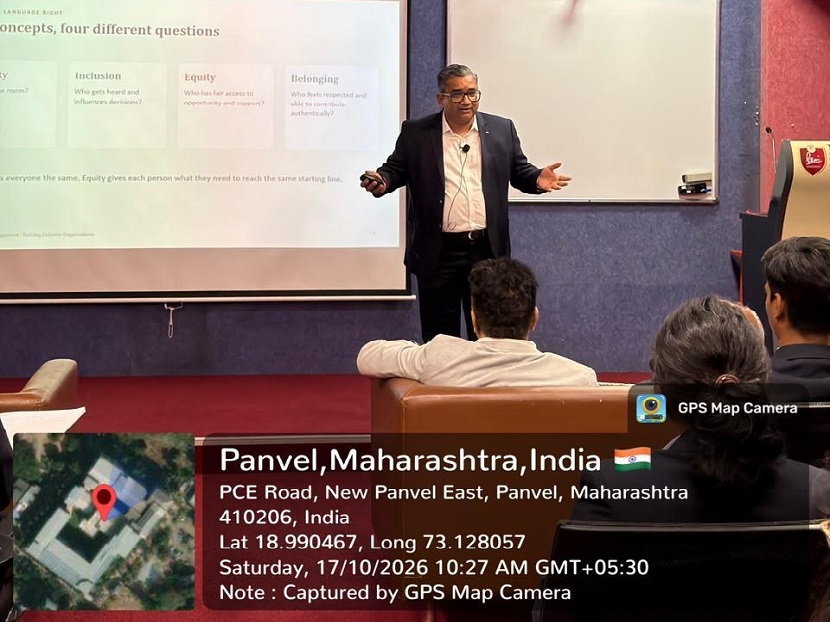
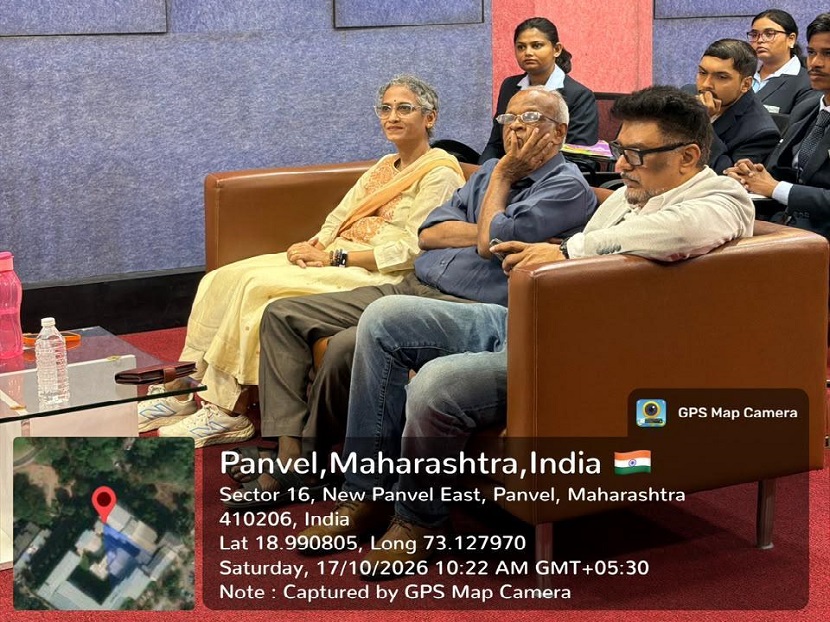
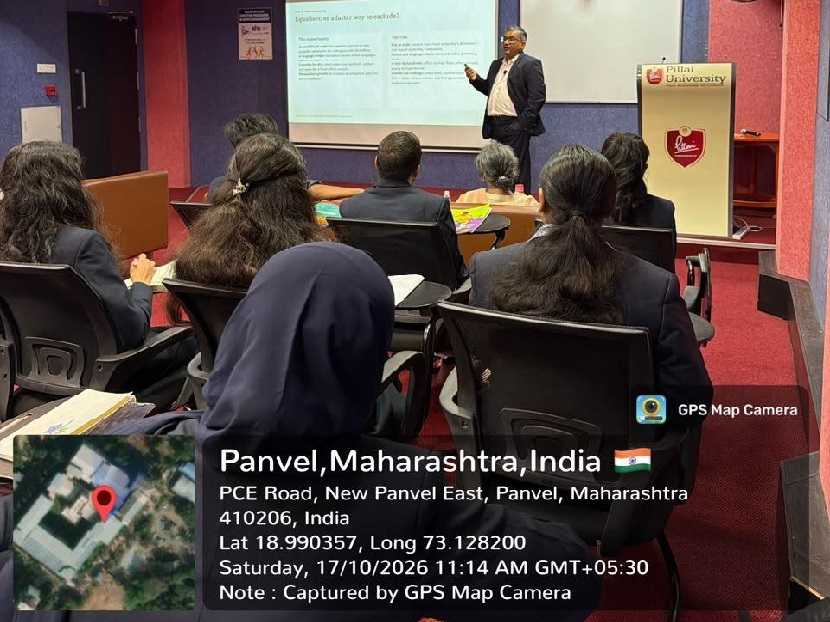
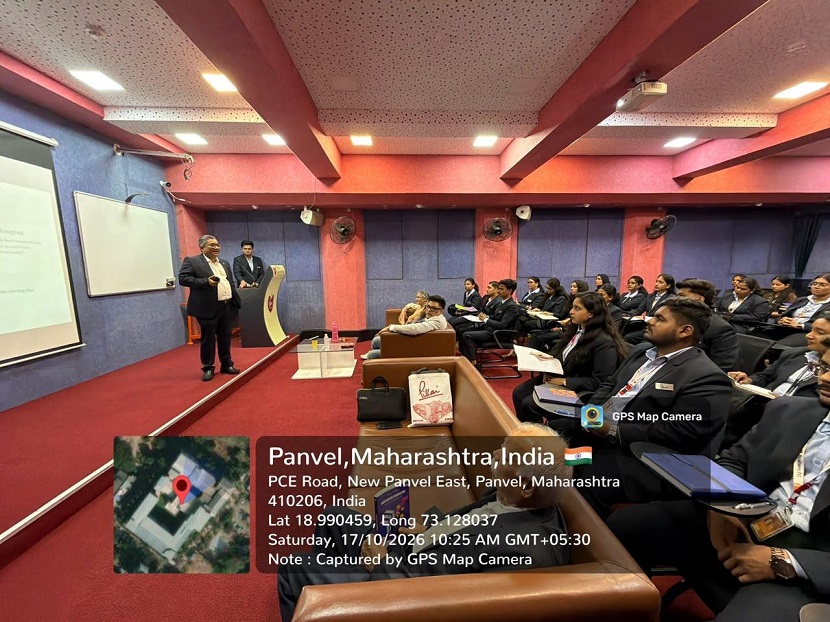
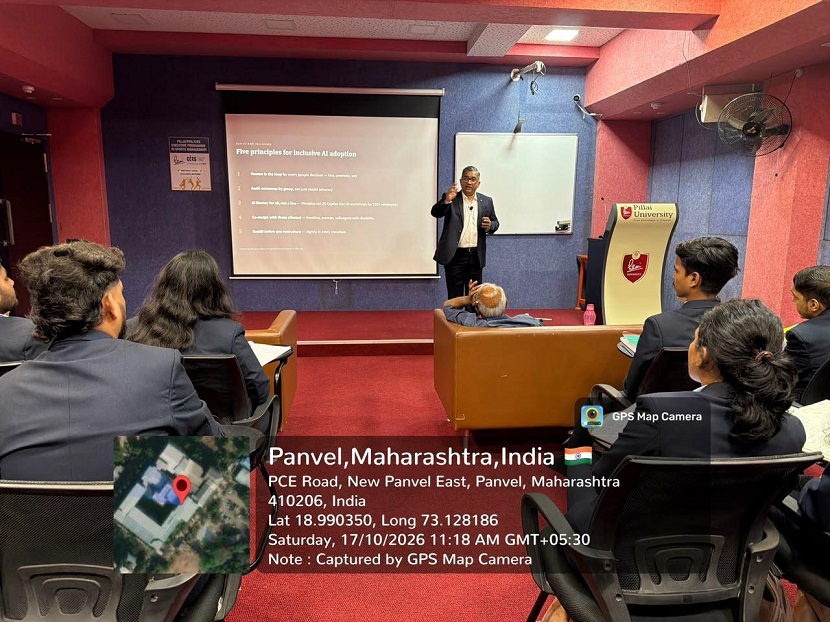
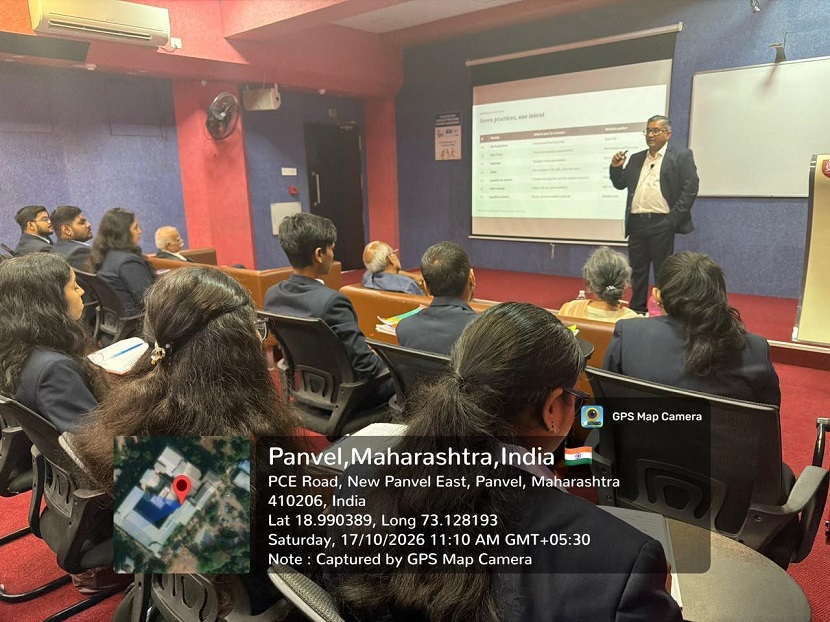
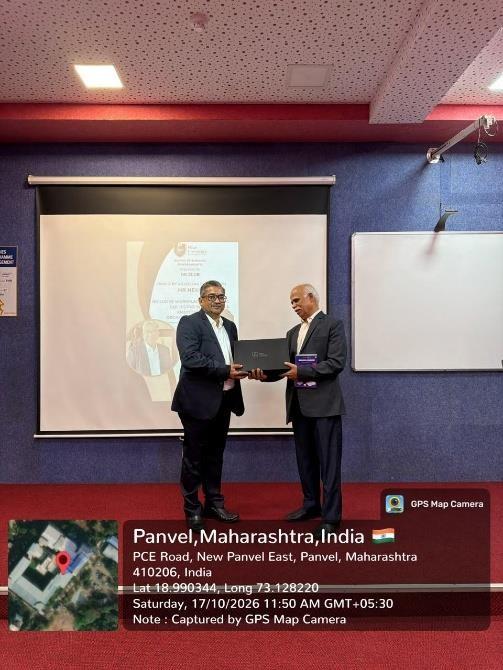
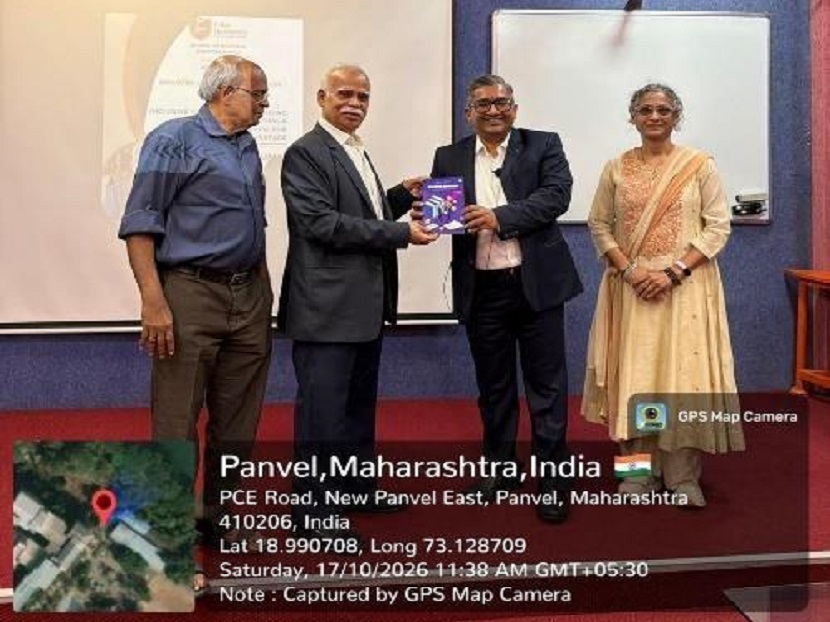
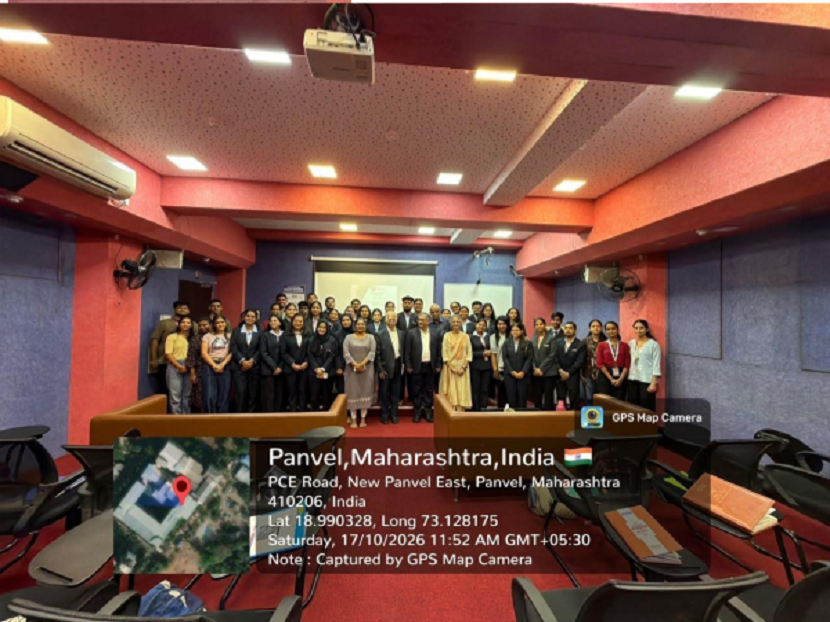
The session commenced with a warm welcome to Mr. Mohit Kumar, whose extensive corporate experience provided students with valuable insights into evolving HR practices and the practical challenges of building inclusive organisations.
During the interaction, Mr. Kumar emphasised that inclusion begins with an individual’s mindset and is reflected in everyday behaviour, decisions, and organisational practices. Drawing connections between contemporary HRM and Indian philosophical traditions, he referred to the Mahabharata, Ramayana, and Bhagavad Gita to illustrate the enduring relevance of respect, humility, empathy, and openness to diverse perspectives in leadership and workplace relationships.
A key highlight of the session was the Indian philosophical principle “Vasudhaiva Kutumbakam,” meaning “the world is one family.” The speaker explained how this philosophy can serve as a foundation for fostering mutual respect, strengthening interpersonal relationships, and creating a workplace culture in which every individual experiences a genuine sense of belonging.
Mr. Kumar also clarified the distinction between diversity and inclusion. While diversity refers to the presence of individuals from different backgrounds, experiences, and perspectives within an organisation, inclusion involves creating an environment in which people feel valued, respected, heard, and empowered to contribute meaningfully. He emphasised that diversity alone does not guarantee inclusion; organisations must consciously cultivate a culture that encourages participation, psychological safety, and mutual understanding.
Drawing upon examples from Indian epics, including Lord Rama’s interaction with Ravana and the Pandavas’ learning from Bhishma, the speaker highlighted that knowledge and wisdom can emerge from unexpected sources. These illustrations reinforced the importance of remaining receptive to learning from individuals irrespective of their designation, seniority, background, or position within the organisational hierarchy.
Another significant insight was that inclusion should not remain confined to special programmes, celebrations, or formal policies. Instead, it must be embedded in everyday organisational practices, including recruitment and selection, meetings, employee development, talent reviews, performance management, and the treatment of employees during organisational restructuring and change. Such an approach enables organisations to recognise individual strengths, encourage meaningful participation, and harness the collective intellectual and emotional capital of their workforce.
The session highlighted the importance of respect, dignity, and belonging in fostering an inclusive workplace. It reinforced the need to learn beyond organisational hierarchies, integrate Indian values such as empathy and humility into leadership, and leverage collective intellectual and emotional capital to enhance collaboration and decision-making. It also emphasised that inclusion must be consistently reflected in everyday HR practices and organisational processes to achieve sustainable organisational advantage.
The HR NEXUS Industry–Academia Interaction provided an enriching learning experience, enabling students to connect theoretical HR concepts with contemporary corporate practices. Mr. Mohit Kumar’s insights demonstrated how inclusive leadership, empathy, and openness to diverse perspectives can help organisations cultivate a sense of belonging while effectively leveraging the collective intellectual and emotional capital of their employees. The interaction encouraged students to view inclusion as an ongoing organisational commitment that extends beyond the representation of diverse individuals and ensures that every employee’s contribution is recognised and valued.
The HR Club, School of Business (Postgraduate), Pillai University, extends its sincere gratitude to Mr. Mohit Kumar for sharing his valuable industry experience, professional insights, and perspectives on fostering inclusive workplaces. Gratitude is also extended to Dr. Chandran, Dr. Gopal, and Mr. Niteen for their guidance, encouragement, and support. The contributions of the second-year HR specialisation students are appreciated for their teamwork, coordination, and professionalism in ensuring the successful conduct of the session.
Special appreciation is extended to Dr. Krushna R Sawant for organising this insightful interaction and providing students with a valuable opportunity to engage with an experienced industry professional. Her efforts in facilitating meaningful experiential learning opportunities beyond the classroom are sincerely acknowledged.
Overall, HR NEXUS served as a valuable platform for industry–academia engagement, broadening students’ understanding of inclusive HR practices and reinforcing the importance of integrating human values with professional excellence to build workplaces where individuals and organisations can thrive together.
